
SortSpoke Platform | LLM
SortSpoke Insurance Document LLM
Extract, Interpret, Transform, and Summarize Insurance Documents.
Purpose-built LLM technology for insurance documents that keeps business subject matter experts in control while eliminating manual data entry on even the most unstructured documents.
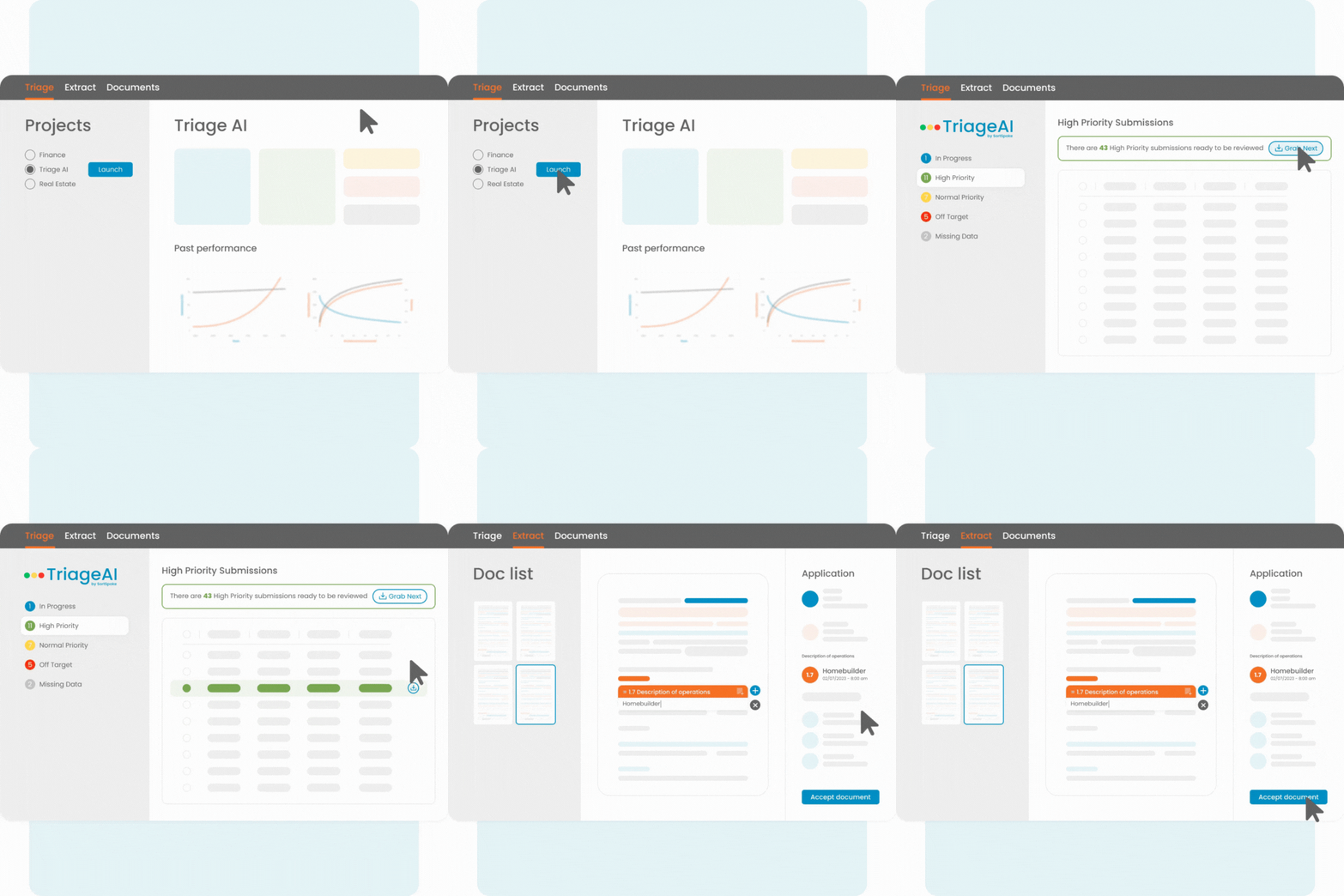
How SortSpoke's Insurance Document LLM Works

How SortSpoke's Insurance Document LLM Transforms Operations
Purpose-built for the insurance industry, SortSpoke's Insurance Document LLM extracts critical data, interprets complex policy language, transforms varied formats into standardized outputs, and generates actionable summaries — all with human oversight on every field and traceability back to the source.
This powerful combination enables underwriters to process more documents while keeping compliance and data quality intact.
SortSpoke's Insurance Document LLM: Capabilities and Document Coverage
Key Capabilities
- Extract & Trace: SortSpoke's Insurance Document LLM automatically identifies and extracts critical data points from unstructured documents while maintaining complete traceability back to the source, ensuring auditability and compliance throughout.
- Interpret & Decide: By leveraging insurance-specific expertise, SortSpoke can be used to accurately interpret complex policy language, make yes/no determinations on coverage questions, and accelerate decision-making.
- Transform & Standardize: SortSpoke seamlessly converts varied and inconsistent data formats from multiple sources into standardized information structures that integrate with your existing systems, eliminating hours of manual reformatting and data entry.
- Summarize & Prioritize: With a specialized understanding of insurance terminology and context, SortSpoke generates concise, actionable summaries of lengthy submissions, complex policies, and cluttered email threads, enabling underwriters to quickly identify high-value opportunities and critical information.

Insurance-Specific Document Intelligence
Unlike general-purpose AI, SortSpoke's Insurance Document LLM is purpose-built for insurance-specific document processing, with a confidence score on every extracted field and your own reviewers on anything below the threshold your team sets.

SortSpoke Insurance Document LLM Features
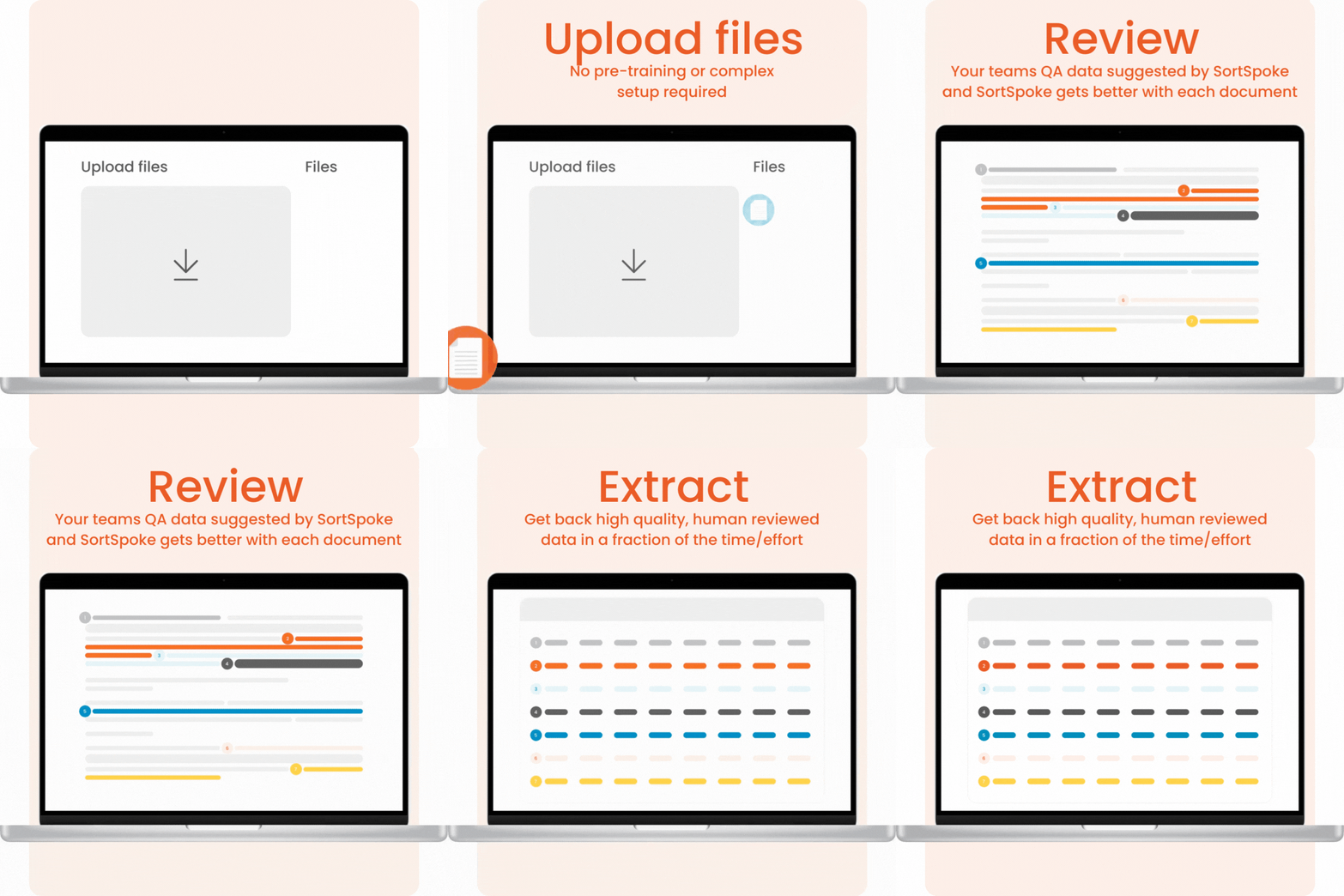
Extract Key Data Without Manual Keying
Underwriters can quickly and accurately extract data in a fraction of the time without the need for manual work, speeding up processes and reducing time spent on tedious work.
Prioritize High-Value Submissions
Not all submissions are created equal. Your team can automate insurance submission triage with customizable triage rules and leverage intelligent prioritization to focus on the right risks that are most desired to bind.

Powerful, Simple, and Traceable
Underwriters can efficiently extract data with a system that’s easy to use and ensures every piece of data is traceable—without ever compromising on accuracy, even for the most complex submissions.
Customer Success Stories
What our clients say about their results.


Insurance-Specific AI
SortSpoke's Insurance Document LLM is fundamentally different from generic LLMs as it's purpose-built for insurance documents.
Unlike public models like ChatGPT, which is trained on general data across the internet, SortSpoke combines ML and LLM technologies specifically tuned to extract, interpret, and transform insurance documents with precision while maintaining complete traceability and human validation.
Benefits:
- Built for insurance-specific terminology and formats, not general web text
- Built-in human validation on every field that falls below your confidence threshold
- Handle any document on any use case with a minimum amount of setup

Industry-Specific Expertise
Unlike black-box AI systems, our approach combines specialized ML extraction with LLMs directly trained and continuously refined by industry subject matter experts who understand the nuances of insurance.
This expert-guided approach ensures the system interprets insurance language the way underwriters do, not how a generic AI would guess.
Benefits:
- Insurance underwriters directly train and validate the predictions
- Transparent decision-making, never a "black box"
- Subject matter expert validation of complex clauses and policy language
- SortSpoke improves based on real underwriter feedback, not abstract algorithms
Complete Audit Trail
SortSpoke's Insurance Document LLM maintains traceability by creating a permanent link between every extracted data point and its source location in the original document.
This comprehensive audit trail allows underwriters to instantly verify any information by clicking directly to the source, maintaining complete transparency and compliance. All actions, including extractions, validations, and transformations, are logged for regulatory and audit purposes.
Benefits:
- Every data point links back to its exact source location
- Complete traceability for regulatory compliance
- Human-in-the-loop verification of extracted information

Any document, any data
Comprehensive Document Support
SortSpoke's Insurance Document LLM processes virtually any insurance document type, including submissions, applications, policies, endorsements, loss runs, emails, schedules, SOVs, broker slips, and supplementary forms.
SortSpoke handles multiple file formats including PDFs (both text-based and scanned), Word documents, Excel spreadsheets, emails, and images, all without requiring templates or predefined structures.
Benefits:
- Works with both structured and unstructured documents
- Handles multi-page, complex submissions packages
- Extracts data from tables, forms, and free-form text

Rapid Implementation
SortSpoke's Insurance Document LLM can be implemented in your existing workflows in just days, not months. Our configurable API and pre-built connectors enable quick integration with your current systems with minimal IT involvement. The solution begins delivering value immediately with no lengthy training period—it adapts to your specific documents and extraction needs through continuous learning with every interaction.
Benefits:
- Up and running in days with minimal IT resources
- Seamless integration with existing underwriting systems
- Immediate productivity gains without disrupting workflows


Our Approach

Solutions

Insights on AI
By clicking Book Now you're confirming that you agree with our Terms and Conditions.
GET A DEMO OF SORTSPOKE
See How SortSpoke Can Help You Process More Submissions
After submitting, you'll choose your preferred demo time. No pressure - pick a slot that fits your schedule.


