McKinsey's Underwriting Operating System Starts in the Inbox. Here's What That Takes.
- McKinsey starts in the inbox
- Three lanes routed by confidence
- Make intake the first domain
TL;DR
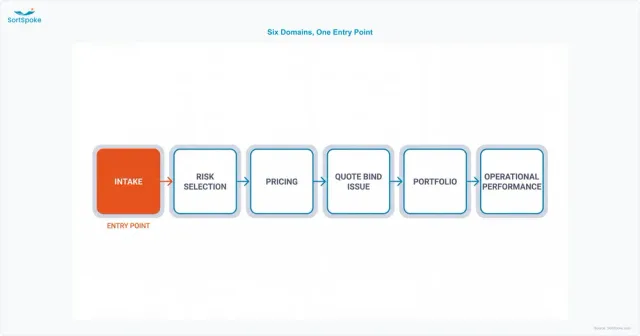
McKinsey's June 2026 article "The future underwriting operating system: From inbox to AI nerve center" describes a "machine-first, human-governed" model for commercial and specialty underwriting. It covers six domains and sends work down three lanes. Our three takeaways:
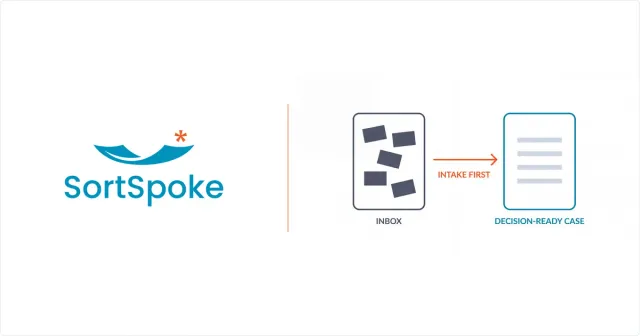
- Everything depends on the first domain: turning the inbox into a decision-ready case.
- Underwriters don't leave. They move to exceptions, judgment and the portfolio.
- Start small, with one line of business and the intake domain.
Every few years a consultancy publishes a picture of the underwriting desk of the future. Most of them are easy to agree with and hard to act on. McKinsey's piece is more useful than most, because it's specific about where the work goes and who does it. And it starts in the same place we do: the inbox.
Here's a summary, so you don't have to read the original, followed by what we agree with, where we'd push back, and how we'd start.
What McKinsey is proposing
McKinsey starts from a familiar problem. Commercial underwriting still looks much as it did ten years ago. Submissions queue up. Underwriters read emails, pull facts out of documents, chase missing information and move cases by hand from one stage to the next, sometimes over weeks.
Their answer is what they call the underwriting operating system (UWOS): a model where AI agents handle routine work end to end, from intake through pricing and issuance, while underwriters focus on complex decisions and the portfolio. They call it an operating system on purpose. In their words, it is "not another tool, interface, or ad hoc process redesign layered onto today's workflow." It's a connected system run by an intelligence layer, which they call the "nerve center."
Work is routed by complexity, confidence and the underwriting authority a decision needs. McKinsey claims three benefits: faster decisions, more consistent decisions, and less redundant data entry and handoffs. The article is a point of view, not a study, so it doesn't put numbers on any of them.
The six domains, briefly
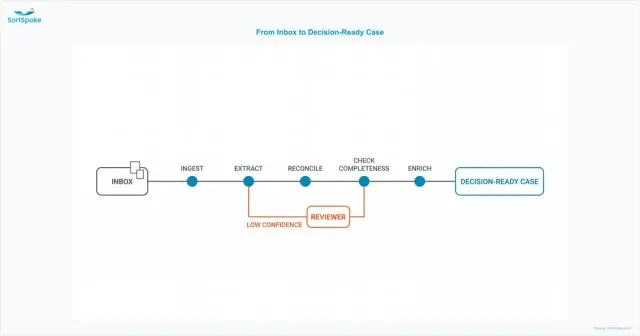
- Submission intake. Agents take in submissions from email, portals and uploads. They extract the data, map it to a standard underwriting schema, check it for consistency and completeness, enrich it with third-party data and ask the broker for anything missing. The output is "a structured, validated, and decision-ready case."
- Risk selection. Agents apply appetite and underwriting rules. They analyze exposure, retrieve comparable past decisions and claims, sort cases by complexity, and recommend a decision with a traceable rationale. Underwriters confirm or challenge borderline cases and own the complex ones. (This is what most carriers call submission triage.)
- Pricing. Agents produce a technical premium, adjust it for risk, broker and market signals, and give a transparent price range. Underwriters adjust it and own strategic risks.
- Quote, bind and issue. Agents generate documents, bind, issue and send to brokers, with a full audit trail.
- Portfolio management. A live view of rate change, price adequacy and win rates by broker, segment and geography.
- Operational performance. Volumes, automation rates, cycle times and bottlenecks, with recommended changes to rules and thresholds.
Everything depends on domain 1
Look at what each later domain needs. Risk selection classifies complexity partly on data completeness. Pricing runs on extracted fields. The portfolio view aggregates case data. Every agent after intake works from intake's output. If the "decision-ready case" isn't actually ready, every step after it is an expensive way to be wrong faster.
That's why we've argued for a while that insurance transformation stalls at the document layer. McKinsey's intake spec is a good checklist for what that layer has to do:
| McKinsey's intake step | What it takes in practice |
|---|---|
| Ingest from email, portals and uploads | Read submissions the way brokers send them, in any layout, without templates to maintain for each carrier's loss run format |
| Extract with document-parsing models | Models trained on insurance documents: loss runs, ACORD forms, statements of values (SOVs), schedules, the broker's email |
| Map to a standard schema; check consistency and completeness | Resolve conflicts across every document in the submission, and flag what's missing before an underwriter opens the file |
| Enrich with third-party data | Prefill and enrichment from external sources |
| Route the rest | Send fields to a person when confidence is low, with an audit trail of every change |
The industry is putting money behind this layer too. In the past month, Applied Systems bought Tailwind to pull loss runs into broker submissions, and Guidewire agreed to buy hyperexponential to speed up carrier pricing. We wrote about what those two deals mean for intake.
Three lanes, not one road to full automation
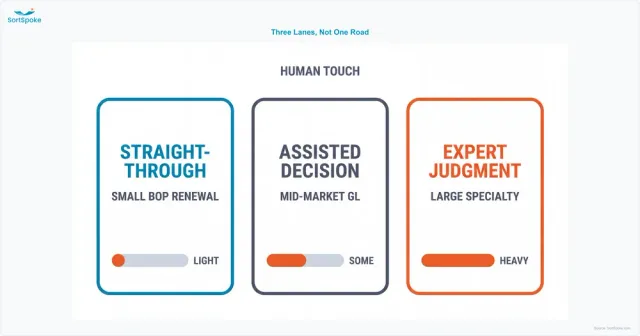
The most useful idea in the article is that automation should vary from case to case. McKinsey describes three lanes:
- Straight-through: simple, repeatable risks that go from intake to issue with little or no human touch, within set appetite, authority and confidence thresholds.
- Assisted decision: medium-complexity cases that the system prepares and an underwriter reviews. The system lays out the facts, highlights uncertainties and recommends; the underwriter approves, amends or declines.
- Expert judgment: complex, high-value or strategic risks that stay underwriter-led. The system packages the case so experts spend their time on judgment and negotiation rather than administration.
McKinsey's phrase for this is "not a single path to full automation." We agree. It's human-in-the-loop, scaled up into an operating model, and it matches what we see in production: insurance document processing is never fully autonomous, and the exceptions are where underwriting value sits.
The mechanism that makes lanes work is confidence. SortSpoke gives every extracted field a confidence score, and routing rules decide what flows through and what goes to a person. "Highlighting uncertainties" isn't a nice extra. It's what lets an underwriter trust everything the system didn't highlight.
The underwriter's job changes; it doesn't disappear
"Critically, the role of humans does not disappear," McKinsey writes. Portfolio underwriters move into oversight. Expert underwriters become exception handlers. The system also learns from them: decisions, overrides and outcomes feed back into the rules and thresholds.
That last point gets less attention than it deserves. A system that learns from underwriter corrections is a system your underwriters shape. That's the difference between AI the team adopts and AI the team works around. BCG put it well when it said that most of an AI transformation is people and process, not algorithms.
Two places we'd push back
"Not another tool layered on"
We agree with the destination: one connected system, not a collection of disconnected screens. But how you get there matters. Underwriters adopt what shows up inside the workbench and policy admin system they already use. A new chassis on day one is a big change for any team. The fastest path we've seen puts intelligence inside existing systems first, and connects them over time. That's modernization without rip-and-replace, and it's how the nerve center ends up being adopted rather than just bought.
Build versus buy
McKinsey notes that AI-assisted development is making it faster for carriers to build UWOS capabilities in-house. That's true, and for some parts it's the right call. Build what makes you different: your appetite, your pricing logic, your routing rules.
The document layer is a different decision. Reading thousands of loss run and ACORD layouts accurately, keeping that accuracy as formats change, and being able to show an auditor where every value came from is costly to own. And it doesn't set you apart from your competitors. Models also drift over time, and someone has to own that. Our advice is to build the orchestration and buy the document layer from someone whose whole job is keeping it accurate.
McKinsey's four first moves, applied
McKinsey closes with four steps. Each is good advice, and here's how we'd apply them:
- Pick a lighthouse case. Choose the line of business where loss runs or clearance hurt the most, not the one that makes the best demo.
- Build the minimum data foundations. Start with the documents and fields that one line needs. Don't wait for the enterprise data model.
- Define the controls. Set confidence thresholds, authority rules, override processes and an audit trail from day one. It's also what regulators increasingly expect. The NAIC's AI Model Bulletin names the extent of human involvement in final decisions as one of the risk factors insurers should account for.
- Launch a targeted workflow. Make intake the first domain, because everything downstream depends on it. Measure time to quote and the steps you removed, not the fields you extracted.
Teams that started this way have seen submission review times fall nearly 90% (a major Canadian P&C carrier), document review cut from up to an hour to about 8 minutes (OneDigital), and 50% less manual data entry for underwriters (RGA).
The bottom line
McKinsey's underwriting operating system is a ten-year vision, and it starts in the inbox. The carriers that get intake right first will give every agent after it something reliable to work with. The ones that skip it will automate their way to faster mistakes.
Free tool
See what intake costs your team.
Benchmark your underwriting team in two minutes and see where the hours go.