What is a Loss Run Report
By SortSpoke
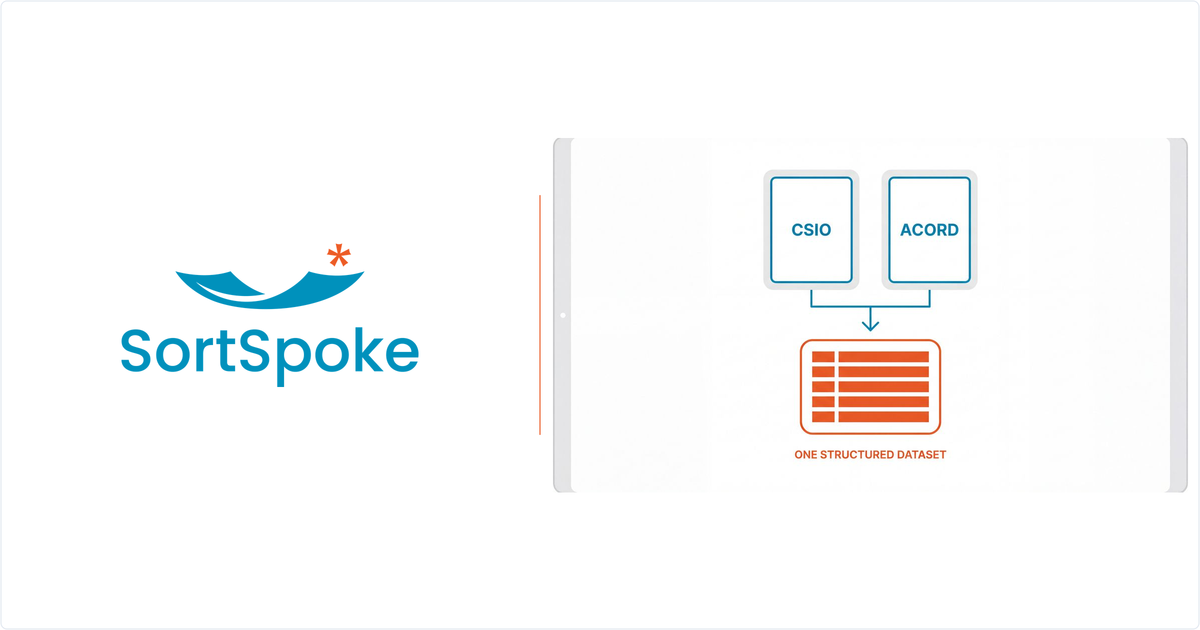
“Insurtech” in Canada gets discussed mostly through a US lens — the same funding rounds, the same direct-to-consumer brands, the same predictions. Very little of that describes the market a Canadian carrier, MGA or brokerage actually operates in.
This is a plain description of the Canadian insurtech landscape: what the term covers, how the market segments, which regulators matter, and where the genuine unsolved problems are.
Insurtech
Insurtech — technology built specifically for the insurance industry, covering how policies are distributed, quoted, underwritten, administered and claimed against. It spans consumer-facing brands, tools sold to insurers and intermediaries, and the infrastructure both run on.
In Canada the term is used most often for the second category: software sold to carriers, managing general agents and brokerages, rather than direct-to-consumer insurance brands.
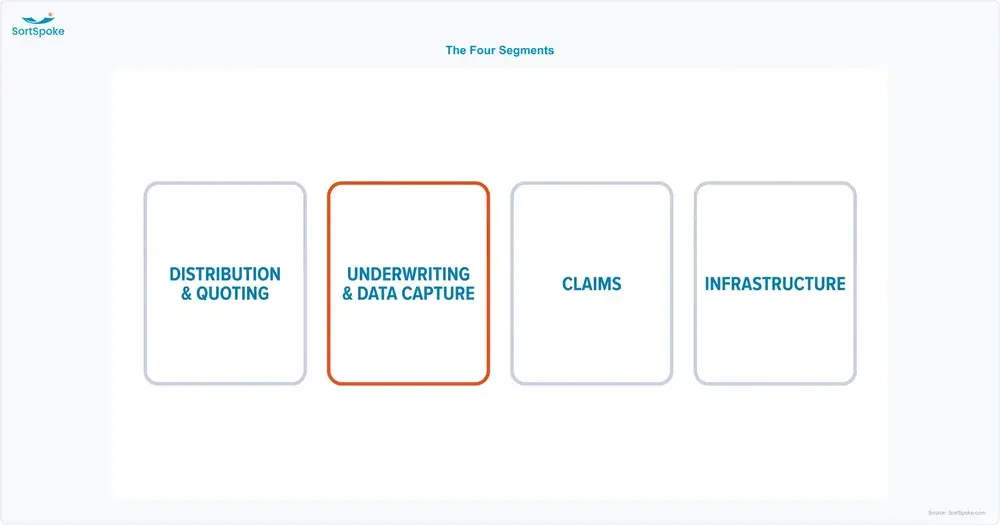
Four segments, roughly in the order Canadian buyers encounter them.
Three structural facts, none of which appear in US insurtech coverage.
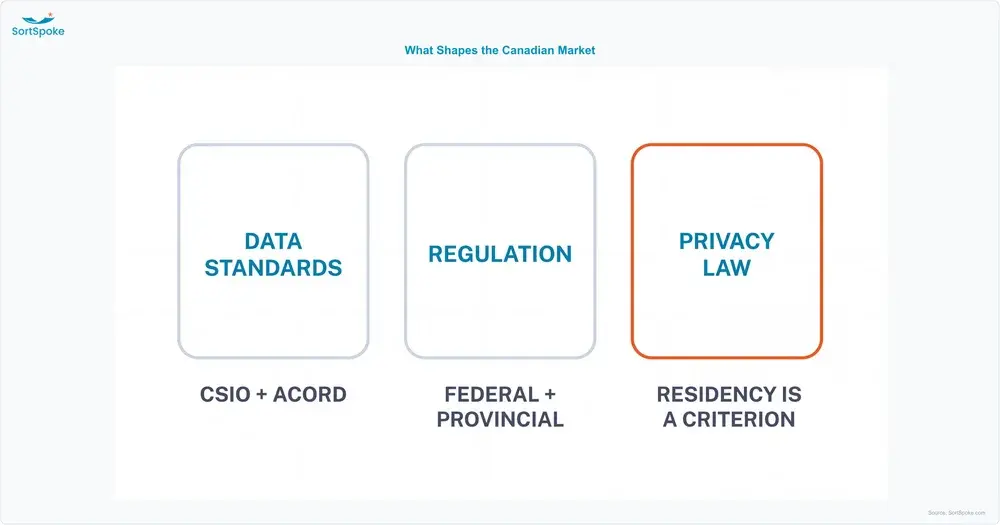
The Centre for Study of Insurance Operations sets the data standards Canadian property and casualty brokers and carriers use to exchange information, including CSIO eDocs for document exchange and a family of CSIO application forms — among them provincial automobile applications that differ by jurisdiction.
ACORD forms remain widespread in commercial lines. So a Canadian underwriting team routinely works across both standards, plus a long tail of broker-specific forms that match neither. Software built for a US-only document mix handles part of that and hands back the rest.
| Body | Scope |
|---|---|
| OSFI | Federally regulated insurers — including expectations on technology, third-party and model risk |
| FSRA | Ontario — insurers, and conduct across the province's distribution |
| AMF | Quebec — insurance and financial-sector supervision |
| RIBO, IBAO, IBAC | Broker registration, representation and professional standards |
| IBC | Industry association for property and casualty insurers |
A vendor evaluation at a Canadian insurer can therefore involve expectations from more than one supervisor, and an MGA inherits some of them through the carriers whose authority it holds.
PIPEDA applies federally to commercial handling of personal information. Quebec's Law 25 adds its own obligations, including around automated decision-making. Alberta and British Columbia maintain their own substantially-similar private-sector regimes.
The practical effect is that where data is processed becomes a live procurement question. An insurer asking a vendor “does our policyholder data leave Canada?” is not being difficult — it is doing the work its privacy officer and its regulator expect.
British Columbia, Saskatchewan, Manitoba and Quebec run public automobile insurance, which changes what an auto submission looks like and who writes it. Ontario and Alberta each carry their own form and filing conventions. Any “Canadian” product that assumes one national pattern will meet a lot of exceptions.
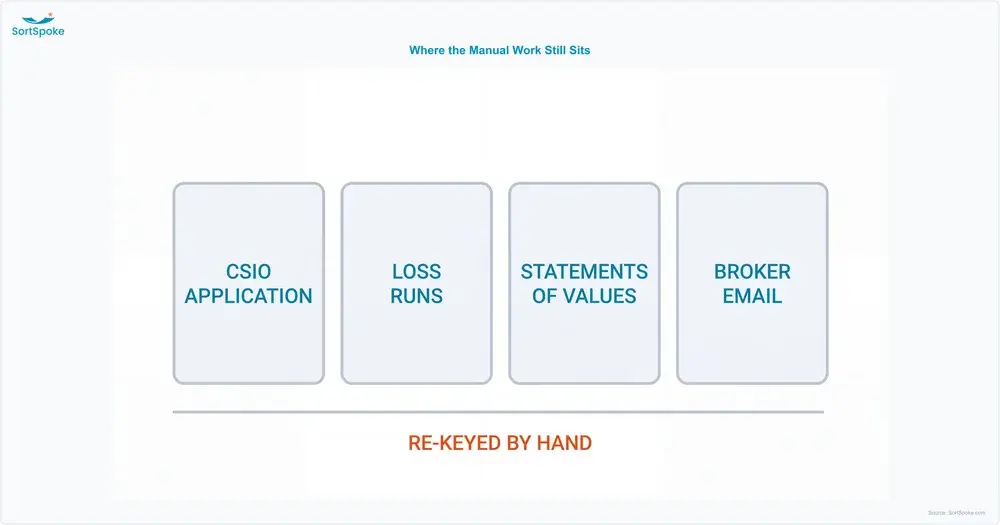
The most-funded segment is not the most under-served one. Distribution and quoting have received sustained attention. The document layer underneath has not.
There is a meaningful distinction inside this problem that is easy to miss: digitizing a blank application form is a form-building problem. Getting data out of a completed one is an extraction problem. They are solved by different technology, and only the second one addresses the re-keying.
The same as elsewhere — technology built for insurance — but Canadian usage leans toward software sold to carriers, MGAs and brokerages rather than direct-to-consumer insurance brands. The Canadian market is smaller, more concentrated, and shaped by CSIO data standards and by federal and provincial privacy law.
No single body regulates “insurtech” as a category. The insurer or intermediary using the technology is regulated: OSFI for federally regulated insurers, FSRA in Ontario, the AMF in Quebec, and broker bodies such as RIBO for conduct and registration. Privacy is covered federally by PIPEDA and in Quebec by Law 25.
No. CSIO sets data and document-exchange standards for the Canadian property and casualty market; ACORD is the international standards body whose forms are widely used in commercial lines, including in Canada. Canadian teams commonly work with both.
There is no blanket rule requiring it. PIPEDA permits cross-border processing with appropriate safeguards, and Quebec's Law 25 adds assessment obligations. In practice many Canadian insurers prefer or require Canadian processing because it shortens the privacy review and removes questions about foreign legal access.
Commercial P&C Insurers Guide to Solving the Underwriting Bottleneck