What is a Loss Run Report
By SortSpoke
The conversation has shifted.
A year ago, insurance leaders were asking "Should we trust AI with underwriting work?" Now they're asking a different question: "We've committed to human-in-the-loop AI—who handles the human part?"
If you've followed the research, you know why the best insurance AI keeps humans in the driver's seat: it's the difference between 16% trust and 60% trust from underwriting teams. The 4x trust multiplier isn't a nice-to-have; it's the difference between a pilot that scales and one that dies.
But understanding why HITL works doesn't answer the practical question: how do you actually organize it?
There's no single right answer. The best staffing model depends on your organization's size, volume, expertise distribution, and strategic goals. Here are four approaches we've seen work—and when each one makes sense.
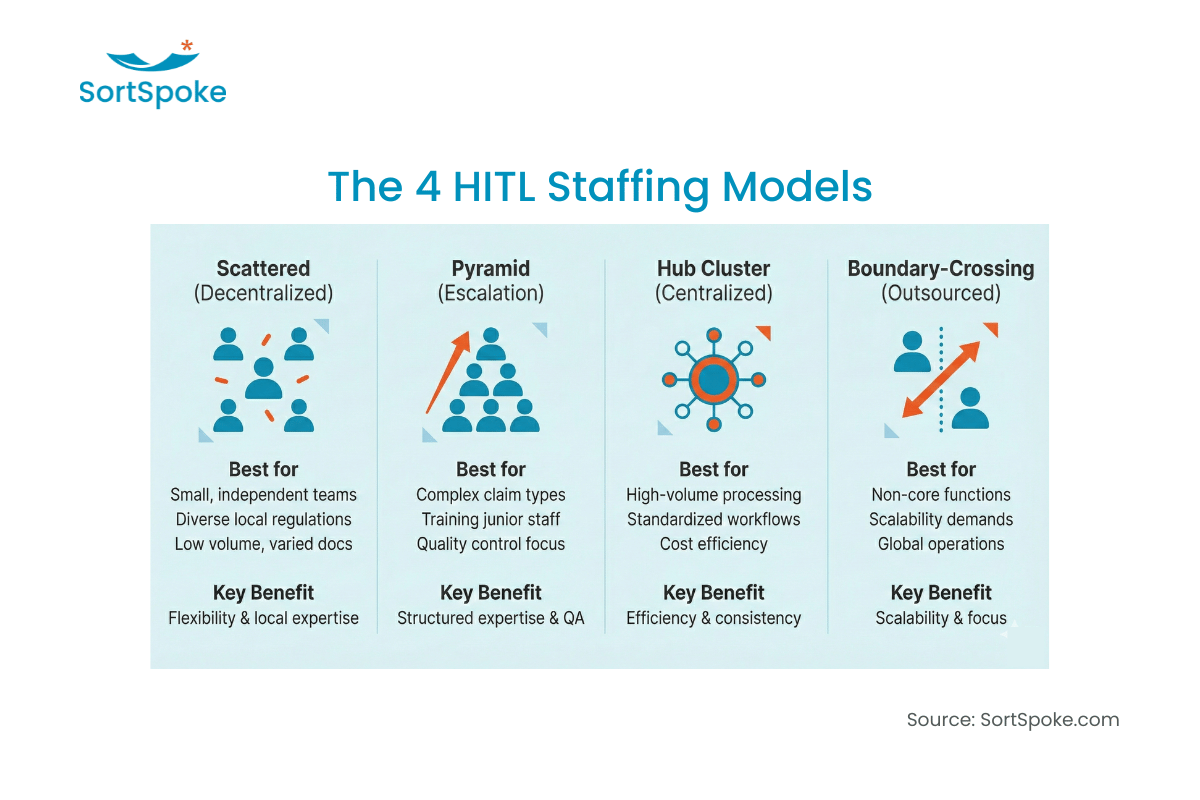
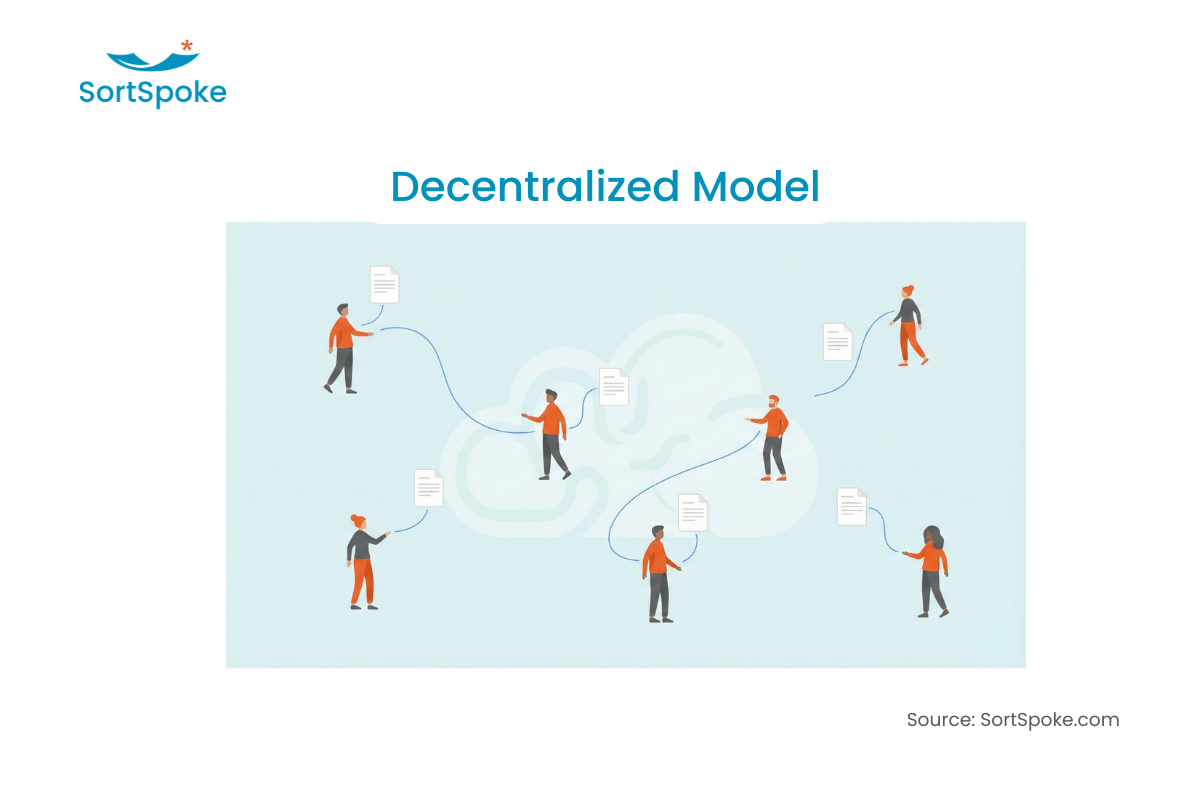
What it is: Your current underwriters and processors handle AI verification as part of their normal workflow. The AI processes documents, flags exceptions, and your existing team reviews and corrects as needed.
Best for: Pilots, smaller teams, distributed operations
This is where most organizations start—and for good reason. You're not asking anyone to change their job or learn a new role. You're simply adding a tool that handles the routine work while your people focus on the decisions that require judgment.
The advantages:
The limitations:
When to use it: This model works well for pilots, for organizations with fewer than 50 underwriters, or for geographically distributed teams where centralization isn't practical. It's also the right starting point when you're not yet sure how much volume you'll need to process.
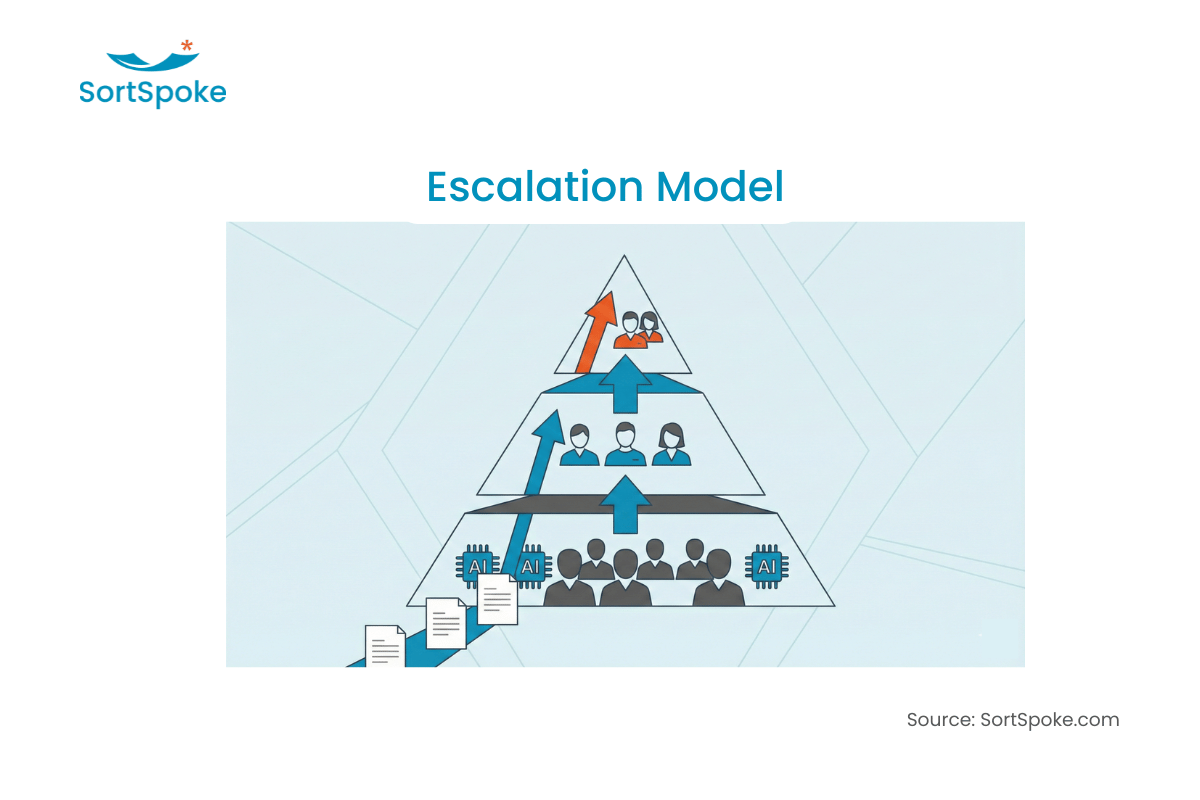
What it is: A tiered approach. Routine submissions are handled by AI with junior staff providing basic verification. Complex cases, edge cases, and exceptions escalate to senior underwriters or subject matter experts for final review.
Best for: Organizations with clear expertise hierarchies, complex product lines
This model recognizes that not all human verification is equal. A data entry correction doesn't require the same expertise as evaluating a borderline risk decision. By tiering the work, you preserve your most experienced people's time for the decisions that actually need it.
The advantages:
The limitations:
When to use it: This model works well when expertise is concentrated in a small senior team, when you have complex or specialty lines that require deep domain knowledge, or when you're trying to preserve and transfer institutional knowledge as senior staff approach retirement.
What it is: A dedicated team handles all human-in-the-loop verification across the organization. This team specializes in AI verification, develops deep expertise in the patterns and edge cases, and becomes the center of excellence for HITL operations.
Best for: High-volume operations, organizations requiring consistent quality, companies with multiple AI use cases
When you're processing thousands of submissions, loss runs, or claims documents daily, a decentralized approach breaks down. A centralized team provides the consistency and specialization that high-volume operations require.
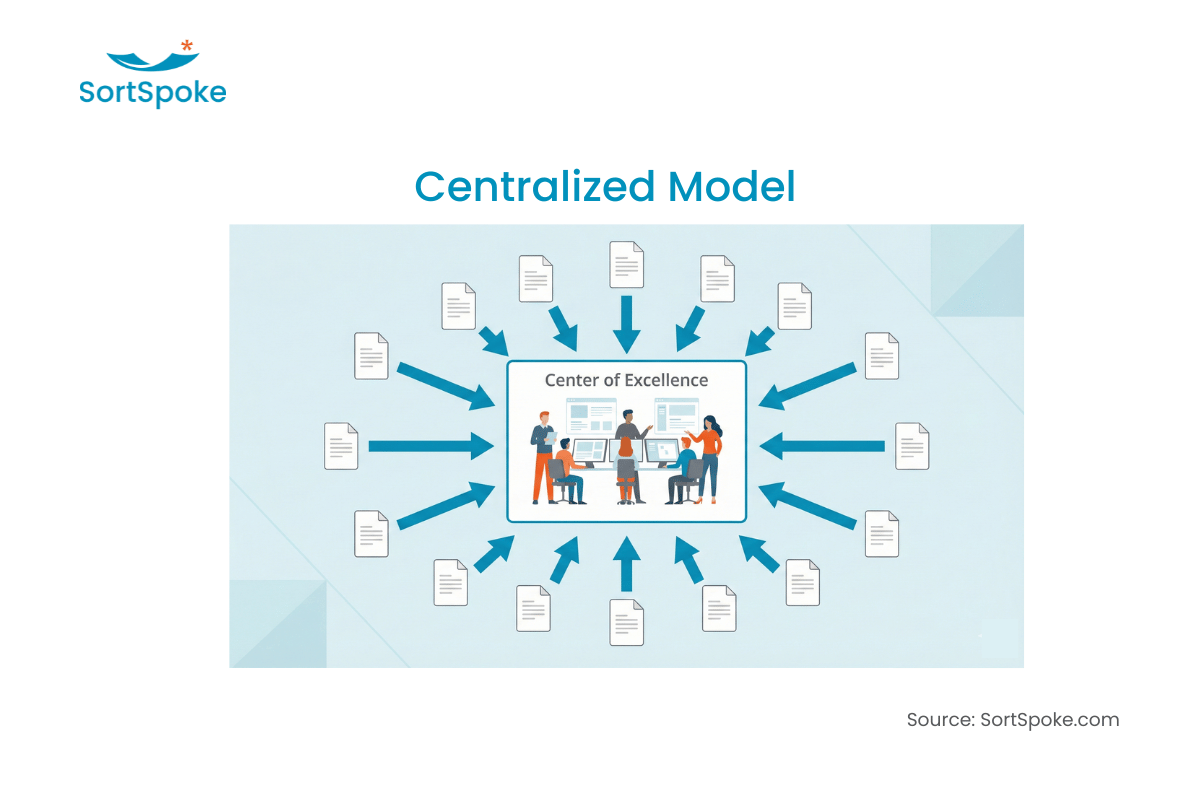
The advantages:
The limitations:
When to use it: This model makes sense when you're processing high volumes (1,000+ documents daily), when you need consistent quality across multiple product lines, or when you're deploying AI across multiple use cases (submissions, loss runs, claims) and want a single team to handle all verification.
What it is: A third-party provider handles the human verification layer. You send documents through AI processing, and the outsourced team handles review, correction, and exception handling.
Best for: Rapid scaling, variable volumes, cost optimization
Outsourcing isn't right for every organization, but it solves specific problems that internal models struggle with: sudden volume spikes, cost pressure, and the difficulty of building specialized teams quickly.
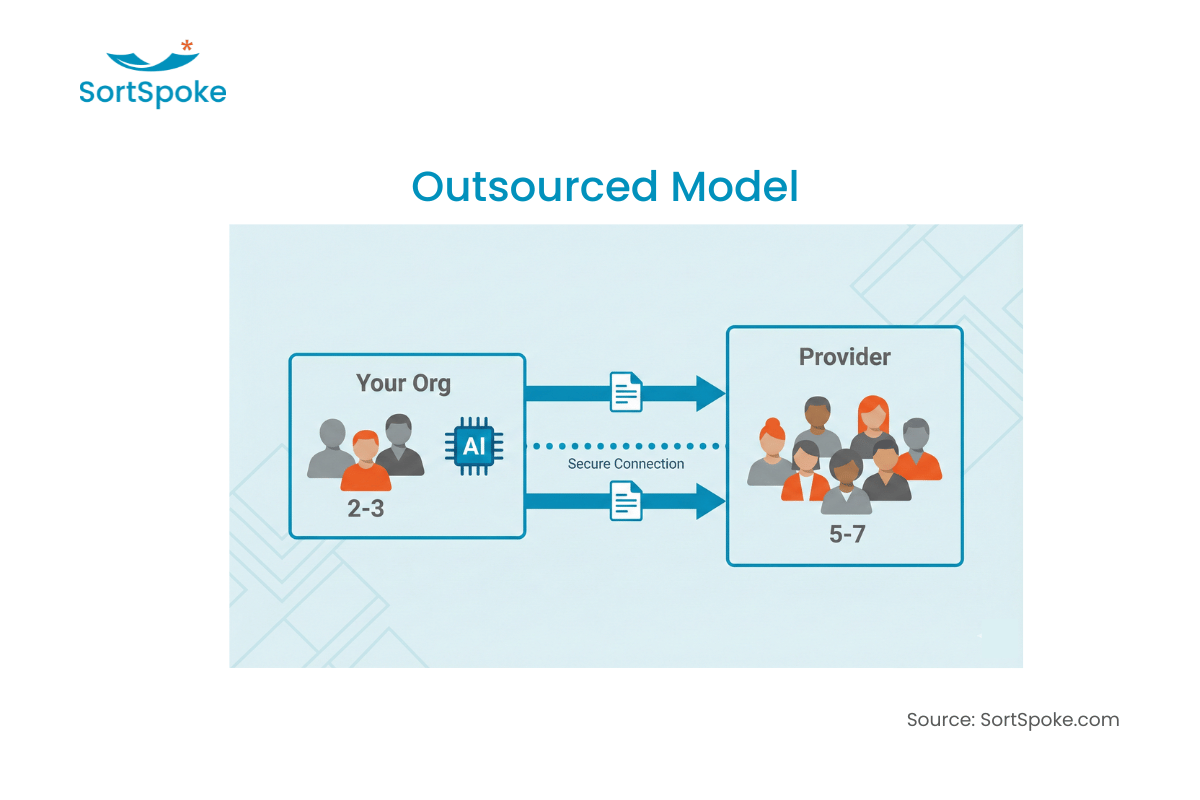
The advantages:
The limitations:
When to use it: This model works well for handling overflow capacity during peak seasons, for organizations with highly variable volumes, or for companies that want to test HITL at scale before committing to building internal capabilities.
Here's the reality: most successful organizations don't pick one model and stick with it forever. They evolve.
Three questions to guide your decision:
Hybrid approaches are common. As McKinsey's 2025 workplace research notes, the AI era "shifts the focus of human intelligence from execution to orchestration and judgment"—and companies are increasingly hiring dedicated "human-in-the-loop validators" to fill this role.
We see organizations use decentralized models for straightforward document types (ACORD forms) while maintaining centralized teams for complex documents (SOVs, loss runs). Or they handle steady-state volume internally while outsourcing overflow during peak seasons.
The evolution path: Most organizations follow a similar trajectory:
The key is designing for evolution from the start. Your Day 1 staffing model shouldn't lock you into a structure that doesn't work at scale. (Before you commit, run through these 9 questions to ask any underwriting AI vendor.)
Commercial P&C Insurers Guide to Solving the Underwriting Bottleneck